04 November 2004

Jujube Tea & Ginger Tea

Koreans are rather fond of something called the Citrus Tea or Citron Tea, more so the women than the men from my observation. Perhaps it has something to do with slimming, I dunno. The word slimming is muted from my vocabulary. Whilst I'm not covering citron tea today, while shopping at that section of the local supermarket, I came across this and decided to give it a whirl.


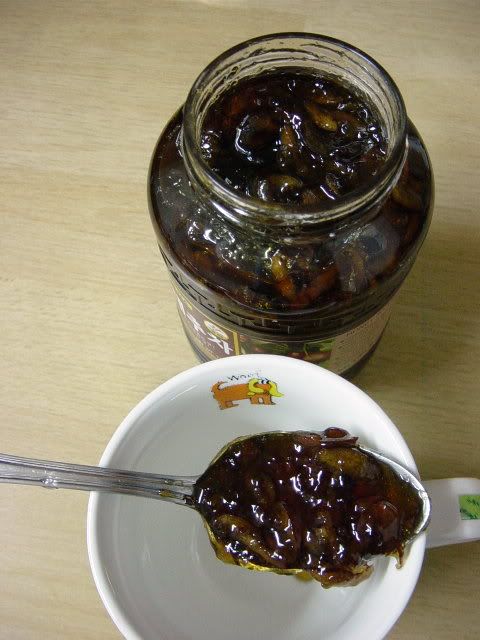
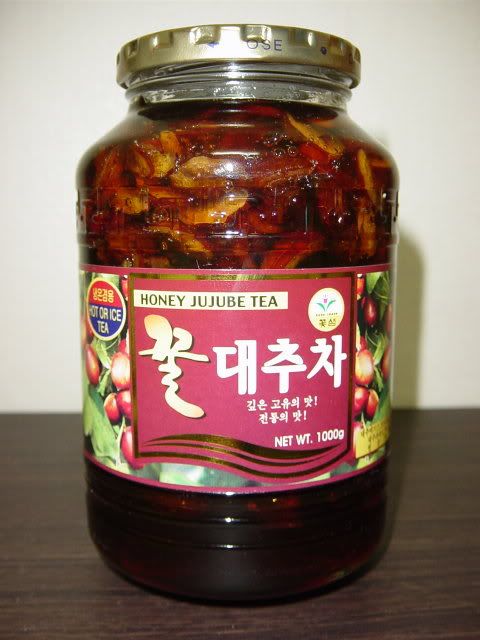
Honey Jujube Tea. KRW6,500 for this jar of Pooh juice.

For those unaccustomed to jujube, they're also called red dates, chinese jujube or chinese dates. More info on jujubes here and here if you're interested.


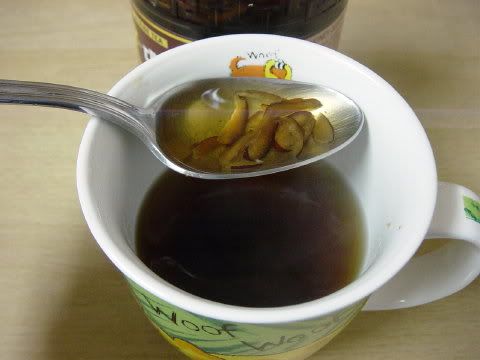
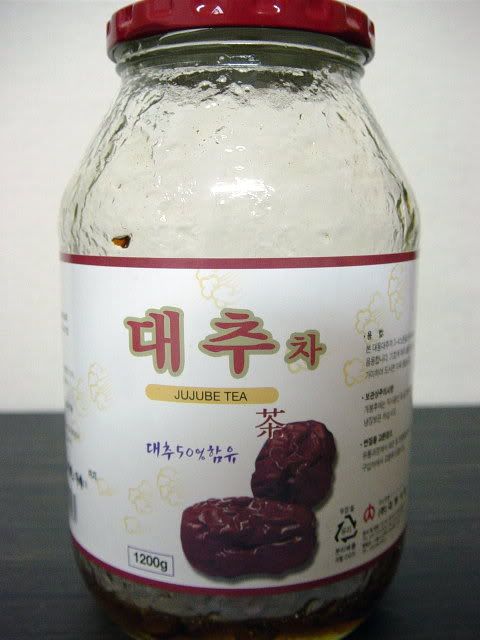
Here's another (albeit finished) jar of Jujube Tea from a different make. KRW6,350.

Jujubes, or red dates, are in essence a fruit and thus can be eaten on their own. They can also be used in a variety of ways to enhance flavour or impart remedial properties. I've had them floating around in soups, deserts, medicinal concoctions, stuffed in chicken, duck, laced in rice dishes etc. They add natural sweetness and a pleasant "feel-good" aroma to everything.


Jujubes on their own are already sweet. But when combined with honey, well, diabetics beware.


Mix with hot water to dissolve the honey and you get a very aromatic cup of jujube tea. Very nice, indeed. Add ice or stick it in the fridge if you want it cold.


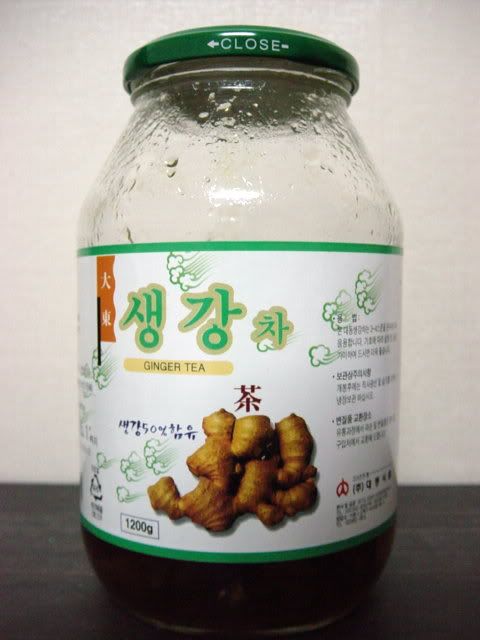
For those who are susceptible to excessive gas by-production of the intestinal tract leading to internal combustion, popularly referred to as farting, ginger is a great remedy for the bloated. So they came up with something similar, except substitute jujubes for ginger. Spicy (from the ginger) and sweet (from the honey) cuppa "tea". KRW6,400 per jar of fart-diffusing tea.

01 November 2004

Shawn's Korea Life Blog

While some of you may already be familiar with Shawn Matthews' Korea Life Blog, his announced (possible) retirement from blogging must come as a surprise to most. After all, it isn't April 1, a prank he pulled on April's Fool this year.

This time, he's seriously contemplating hanging up his keyboard - he cites his reasons on the blog. Should this crystalise, the Korean blogosphere will miss him dearly. However, I respect his decision and from one blogger to another, I understands his reasons.

Cheers mate and remember, stay HAPPY always. Peace.

29 October 2004

Seoul - 11th Most Expensive City

An article in the Korea Times some days back reported that Seoul is the 11th most expensive city in terms of travel cost.

Here is the link to the Korea Times article. Should this link expire (which it eventually will, no doubt), here's a screenshot of said article preserved in FatMan's vault.

Quote from article - "Three meals in Seoul cost $131.94, the 15th most expensive in the world." (US$ one would assume)

Hmmmm ..... readers here would know that a decent meal can be had for an average cost of USD5.00 - USD10.00, and if you want to splurge, yea maybe even USD20.00. So my attention was directed to this paragraph ... "the report (is) based on materials from Business Travel News, a U.S. travel newspaper". Ahhh ... that explains it. US businessmen travelling to Seoul either got very badly ripped-off OR ate at fancy hotel establishments OR abused their corporate credit cards. Sure, I've been guilty of the latter on rare occasions, but surely the Korea National Tourism Organization (KNTO) is not helping to clarify this, which is sure to scare off any potential inbound tourists.

So FatMan says, NO it won't cost you USD131.94 for 3 meals in Seoul, not unless you eat really really fancy. So welcome to Kimchi-land .... cheers!

While we're on this subject, here's another article in Korea Times circa June 2004 which ranked Seoul as the 7th most expensive city in a Cost Of Living survey conducted by Mercer Human Resource Consulting.

Yea I know ... it feels like this ....


26 October 2004

Wedding - Part 2 of 2

Sorry for the long wait guys. Been busy practising for the Burnout 3 : Takedown Online World Championship ......
Now on with Part 2. (on second reading - only console gamers will probably get that last bit)
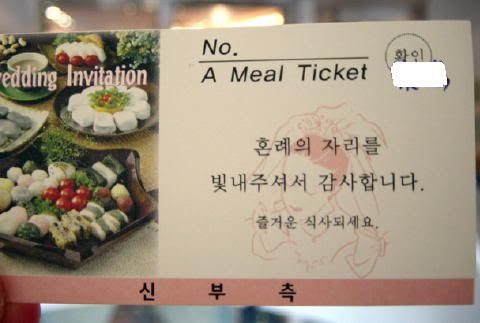


Here's the meal voucher I introduced in Part 1, aptly titled "A Meal Ticket". You usually get one of these when you hand over your cash gift at the desk. The cash is tucked inside a plain envelope with a simple congratulatory message (e.g. "You've Been Taken Down" (another veiled reference to Burnout 3 if you don't get it)) and your name; just for the record they usually say but more likely used when the matrimonial couple compare notes during the loot count.

If you're part of a group contribution, get your meal voucher from the point man in your group. Everybody remember now, no ticket no food!
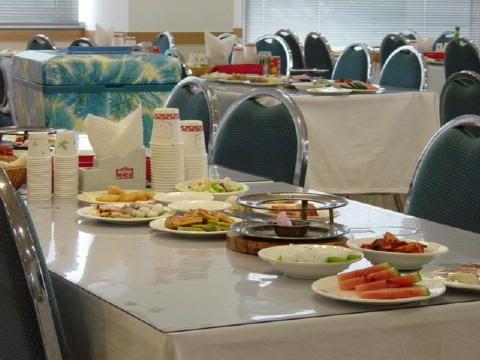


Ahh ... the admission ticket gets you into the dining hall, the one true reason we're all here today. This is a typical dining hall in a Wedding Hall type wedding. Ssshhh!! Bite your tongue - this isn't an office cafetaria!!

The food and drinks are all decked out on the table as guests stroll in after getting past the tight security check and guard dogs.
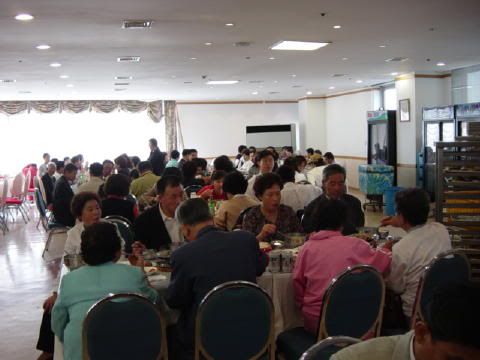


There is no guest allocation system or assigned seating. Basically, you walk in, sit at a table and once the headcount hits 8 (or whatever the maximum seats per table), you move on to the next table. So, the bigger your congregation, the stronger your bargaining power at demanding adjoining tables from the warden.
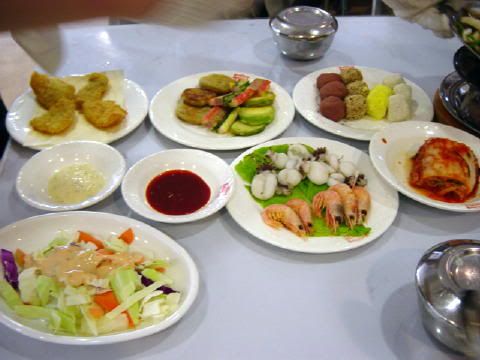


An assortment of errr ..... food.
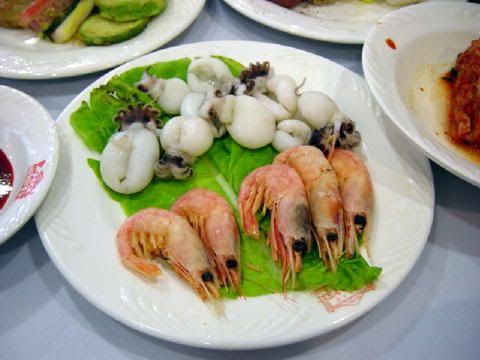


The orange bits are called prawns. They're boiled and served. The white bits are deformed baby octopus. They're also boiled before serving.

I think this dish has some kinda symbolic meaning to it, like the ying-yang of life, or longevity & prosperity, or maybe it's just food. Darn .... those Korean cultural classes I took were a waste of money then, weren't they?
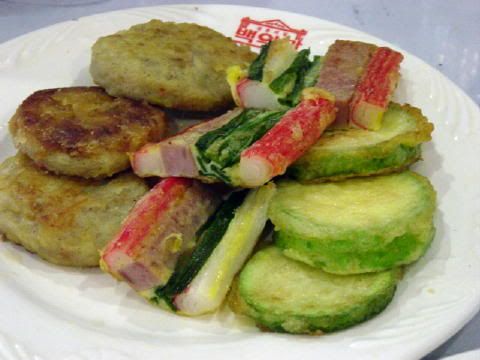


Pieces of egg-battered fried stuff - (left to right) minced pork patties, crabstick-spam-leek kebabs and sliced cucumber. The best-when-cold principle doesn't apply here, but someone forgot to tell them that.
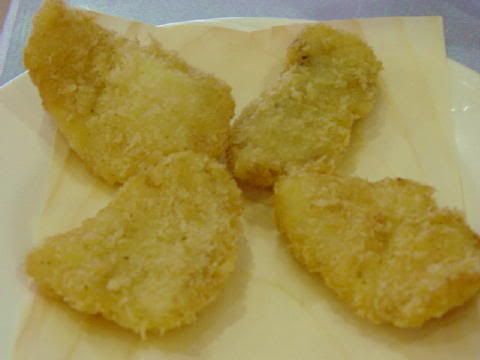


Deep-fried chicken nuggets. The oil-drenched paper napkin somehow just doesn't quite fit right. Maybe it's just me.

Hey you-stranger-sitting-beside-me!! That's MY piece.
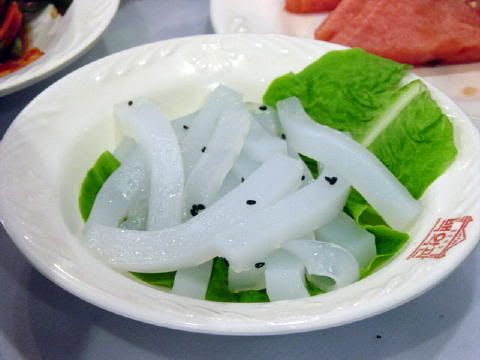


Mung-bean jelly, or cheongpo muk, are sliced into strips and served with a shake of black sesame seeds.

Muk, or jelly, is a popular Korean item. They're not sweet desert jelly that many of you may be familiar with. Depending on the source ingredient used, there are several varieties of muk readily found all over Korea. Most common are the above, buckwheat jelly (memil muk) and acorn jelly (dotori muk). They are served plain as side dishes or mixed with other savoury ingredients such as meat, veges and sauces to form complete meals on their own.
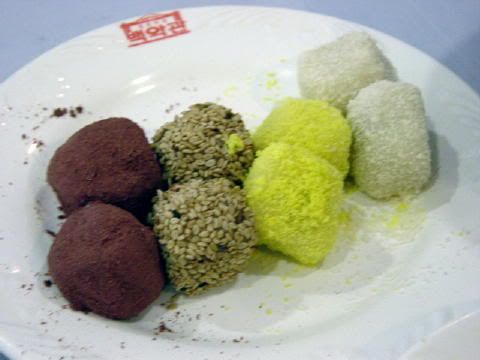


This is a Korean staple - rice cakes, or tteok. Tteoks are customarily served at weddings and other significant occasions (e.g. newborn's birthday, the day I complete Burnout 3, oh did I mention weddings).

There are many many kinds of tteok, some 300+ if I recall, in all shapes, colours, texture & taste. Read all about tteok here.
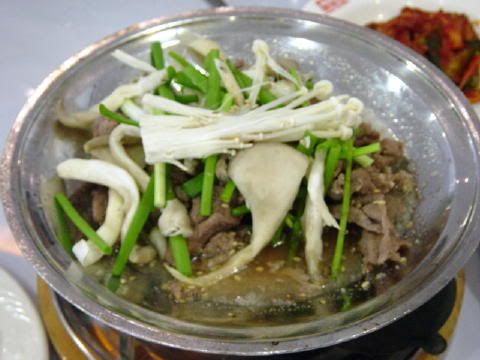


This is sinseollo, or hot-pot, which sits proudly in the middle of the table for all to share. Thin beef slices, mushrooms, spring onions in a sweet brown bulgogi sauce.
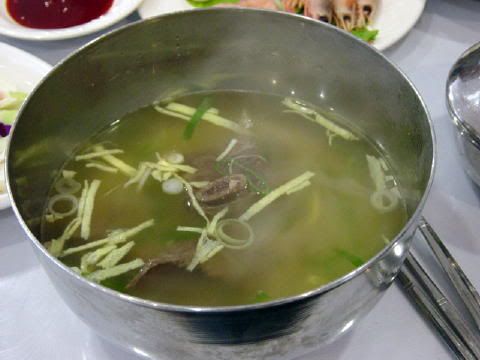


Each person at the table gets one of these - kalbi tang, or beef rib soup, and a bowl of rice. The soup comes piping hot, and is rich in beefy flavours. It is a clear soup, but must have been boiled for many many hours to extract that kind of flavours from the bones.

In case you're wondering, I have no idea why the silver bowls are so gigantic. You can fit your entire face into it. I know - I have the stretch marks to prove it. Some people combine the bowl of rice into the soup bowl and eat it out of one large bowl, while others keep them separate and shuttle between the 2 bowls.

So let's face it. A food-fest it is not. If you want this, just head on over to Seoul Grand Hyatt Hotel's buffet restaurant. Unlike most other wedding rituals around the world, where food, alcohol, music, dancing, games and even plate-throwing are all climax to the day's event, it's quite different here in Korea, or at least from the few that I've been privileged to be invited to. It can appear somewhat cold and stiff. If I'm wrong on this point, do let me know.

OK, so a food fest it is not. But hey, you're here for the wedding, to share in the couple's happy day, to partake in the festivities, to catch up with old friends and relatives whom you haven't seen since the groom's last wedding, to redistribute the national income, to get all dressed up instead of walking naked at home. It's not all about the food, come on.
19 October 2004

Wedding - Part 1 of 2

Event : Wedding
Date : Last weekend
Venue : Seoul
Purpose : A glimpse of a typical modern Korean wedding.


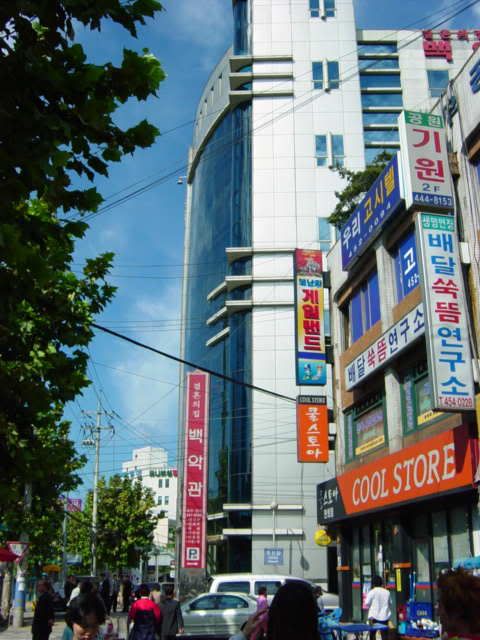
Typical "wedding hall" building (tallest building in the photo). First impressions for some of you may be "hmmm ... a pretty bland building, looks just like any ordinary office building". Second impression would be "yes, absolutely right".


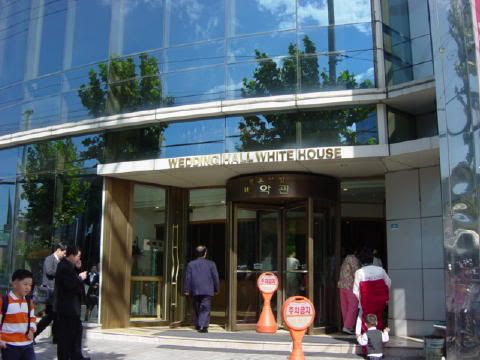
Entrance to the Wedding Hall. As the sign says, we're at the White House Wedding Hall. I wonder if Ms. Lewinsky's working here?


The building houses 9 floors of the same as the one we'll be exploring today. That means 9 weddings simultaneously every hour, 10 hours a day, 7 days a week, 52 weeks a year, 10 years a decade, 10 decades a century ... I digress.


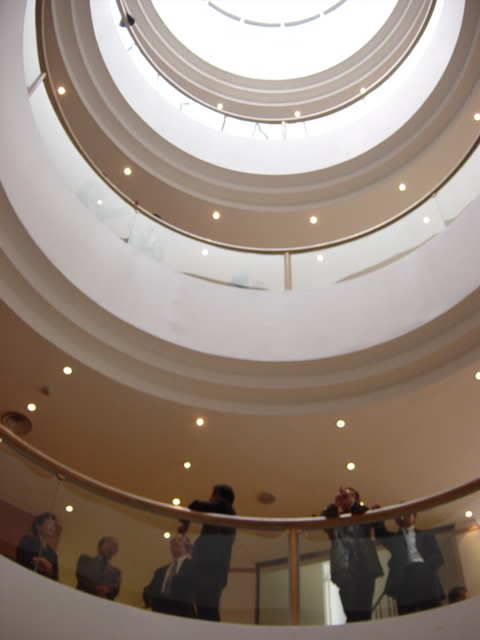
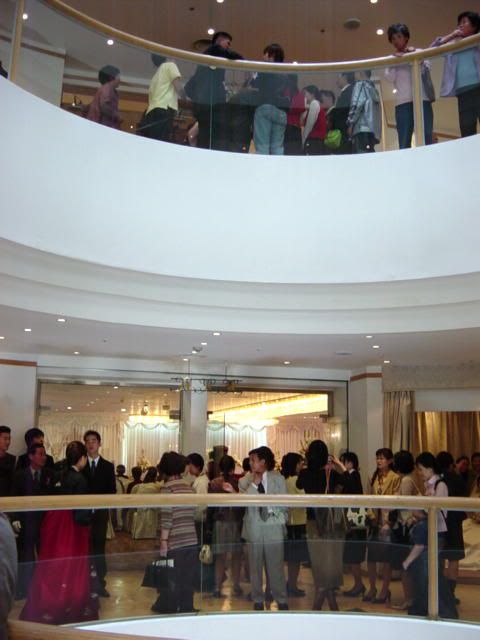
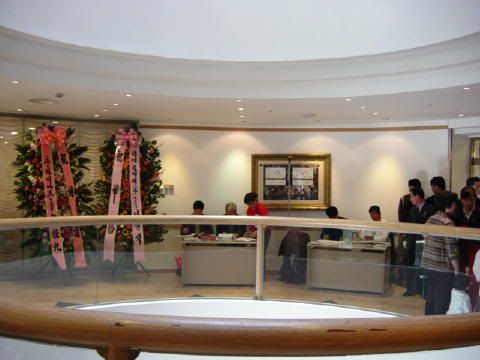
This is the floor where our action is for the day. Don't ask me who those guys loitering upstairs are. They belong to a different faction.

This is the main entrance to the wedding hall. Lots of guests milling outside, reluctant to go inside. Face reality, folks, it's too late to back out now.


To the left of the main entrance is the extortion donation gift collection desk - one for Team A (bridegroom) and the other for Team B (bride). This is where guests line up to part with their gifts, commonly cash, though I've seen credit cards accepted and even a live cow once. Speaking of in-laws, they're somewhere in the hall. It is also at these desks that they hand out the meal vouchers. More on that later. For now, that means no gift no meal voucher.

Typically, expect to pay contribute anywhere between KRW20,000 to KRW100,000, depending on your status, wallet size and face value. If the couple is employed in an organisation, someone in the office will come round to collect $ from you days before the wedding and present it as a labour union group. You can thus expect the cash drawers to be well guarded and in the hands of only the most trusted of family members.


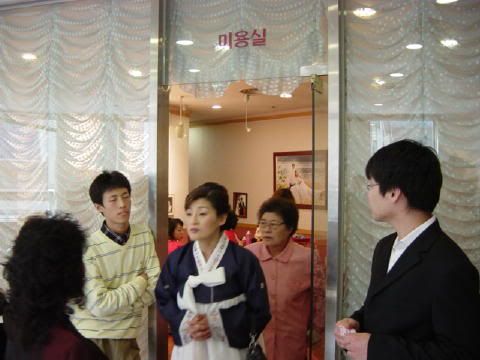
This is the dressing room and powder room, just outside the main hall if you need any last minute touch-ups. I asked, but there was no botox shots or liposuctions on offer.

The lady in blue is wearing "hanbok" (한복), the traditional Korean costume.


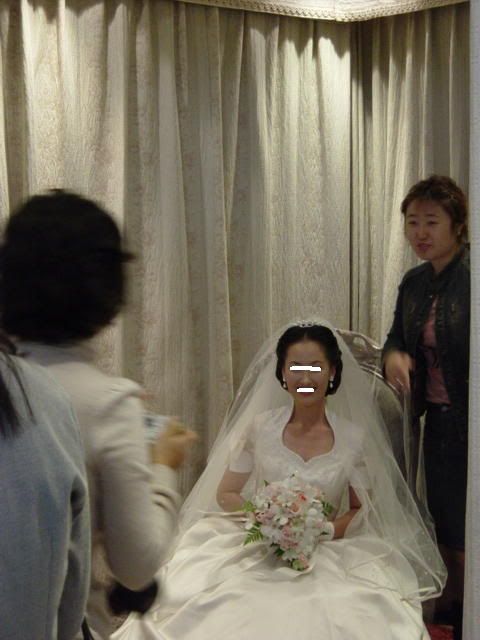
To the right of the main entrance is the snapshot booth, where the bride sits for like 15 minutes to allow well-wishers to come up and say hi and/or have their photo taken with the bride for eternal cherishment. Obviously, bridegrooms are just a waste of film in Korea (or for those living in the digital age, a waste of memory card space). And no, the white bits wasn't the work of the make-up artist.


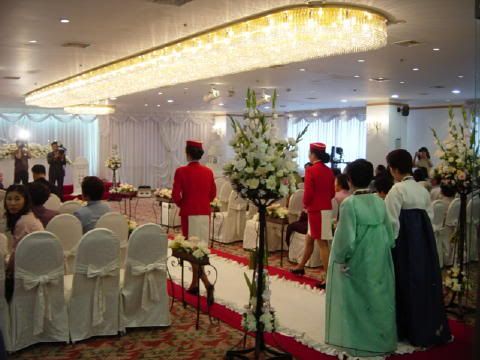
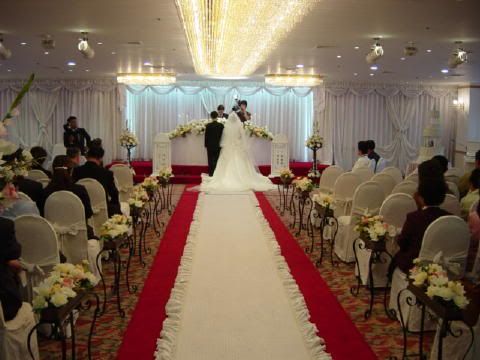
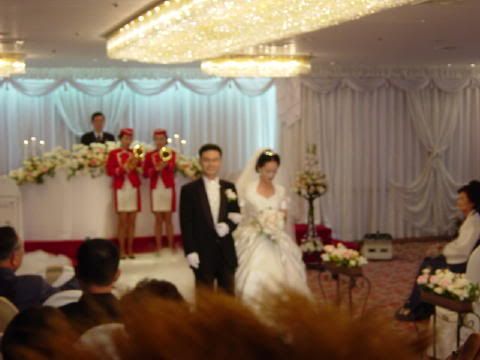
The ceremony kicks off with the ladies in red ushering the parents of the couple to their seats at the front. This is followed by the couple's "dum dum dum dum" march down the aisle.


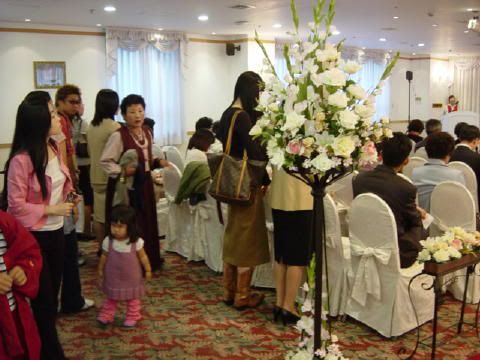
Here's the bit I find a little off. It appears that the common practice at these sort of do is to hang out, stand and chat away at the back of the hall ......


..... even though there's lots of empty seats upfront. Guess everyone is just poised for a quick getaway.


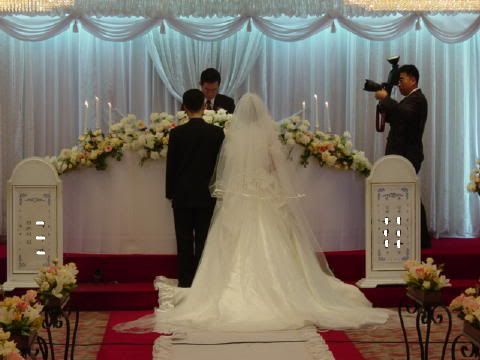
I do, you do, let's do.


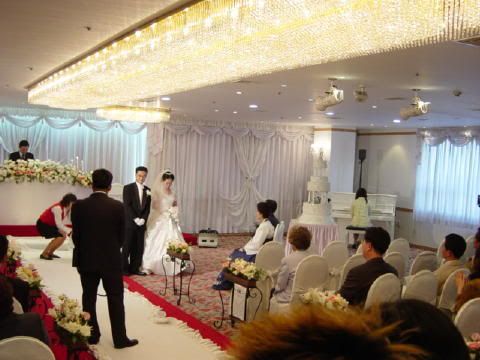
Bow to the parents, get their blessing, and try not to stare at the cameraman too long to be this obvious that you're not paying attention.

Note wedding cake and lone pianist in the background.


I now pronounce you hubbie and wifey.


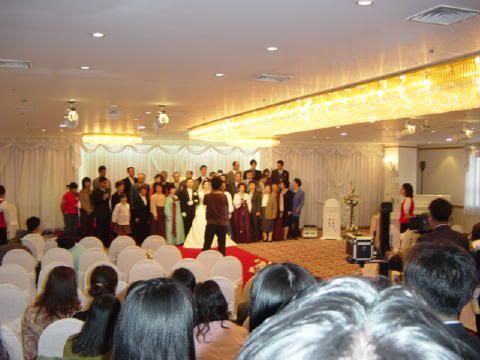
The ceremony ends with a family photo session. The couple and parents adjourned to the customary tea-serving ceremony in their traditional Korean costumes, which this papparazzi was not privy to. While they're busy at it, the guests are off to stuff their face. .... Part 2.